

Signs a Tree Needs to Come Down
Nobody wants to take down a mature tree, and we do not push people into it. Nor should anyone. It took decades to get that size, it shades the house in August, and the garden looks wrong without it. So the usual question we get is not "can you remove this" but "does this actually have to go?"
Often the answer is no. Plenty of trees that look alarming are structurally fine, and plenty of problems are solved by pruning rather than removal. But some signs are worth acting on, and the difference is worth knowing.
The signs that matter most
Movement at the base. This is the big one. If the soil around the trunk is lifting, cracking, or has opened a gap on one side, the root plate is shifting. This is the one to treat most seriously, because it points to a failure of the anchor rather than a problem with a branch.
A lean that is getting worse. A tree that has leaned the same way for twenty years is usually fine. A tree that leans further each season, particularly with disturbed soil at the base, is not the same thing at all.
Decay in the trunk. Deep cavities, soft or crumbling wood, and large areas of missing bark all suggest the structure is compromised. Mushrooms or shelf fungus growing on the trunk or at the base often indicate decay inside, since many of those fungi live on dead wood.
A split at a main fork. Where two large stems meet at a narrow angle, bark can become trapped in the join and stop them bonding properly. Those unions fail, and they fail suddenly under load.
Dead wood high in the crown. A few dead twigs are normal on any tree. Large dead limbs, or a crown that leafed out noticeably thinner than last year, suggests the tree is losing the ability to support itself.
What about roots and buildings?
Roots lifting a walkway are a repair job rather than an automatic death sentence for the tree. Roots into a foundation or a drain line are more serious and worth assessing properly.
What usually does not mean removal
Plenty of things look worse than they are. Moss and lichen on the bark are cosmetic here. They say nothing at all about the health of the tree, and in a climate like ours you would struggle to find a mature trunk without them. A single storm-damaged limb is a pruning job, nothing more. Surface roots are normal for many species and rarely mean anything. Some seasonal leaf drop, discoloration, or a poor year after a dry summer is a tree under stress rather than a tree that is finished, and stress is often recoverable.
This is why we would rather look than guess. In our experience the visible drama and the actual risk are frequently unrelated.
Where the tree stands changes the answer
A hollow tree in the middle of an open field can stand for years and harm nothing if it comes down. The same tree ten feet from a bedroom wall is a different conversation entirely. Assessing risk means asking what the tree could reach: the house, the driveway, the road, the neighbor's roof, the place the children play.
A tree with a real defect and nothing at all beneath it may simply be worth keeping an eye on for a season or two, checking whether the lean has moved or the cavity has opened further, rather than removing it on the spot. A tree with a far more modest defect standing directly over a bedroom deserves more caution.
Do not wait for the storm to decide
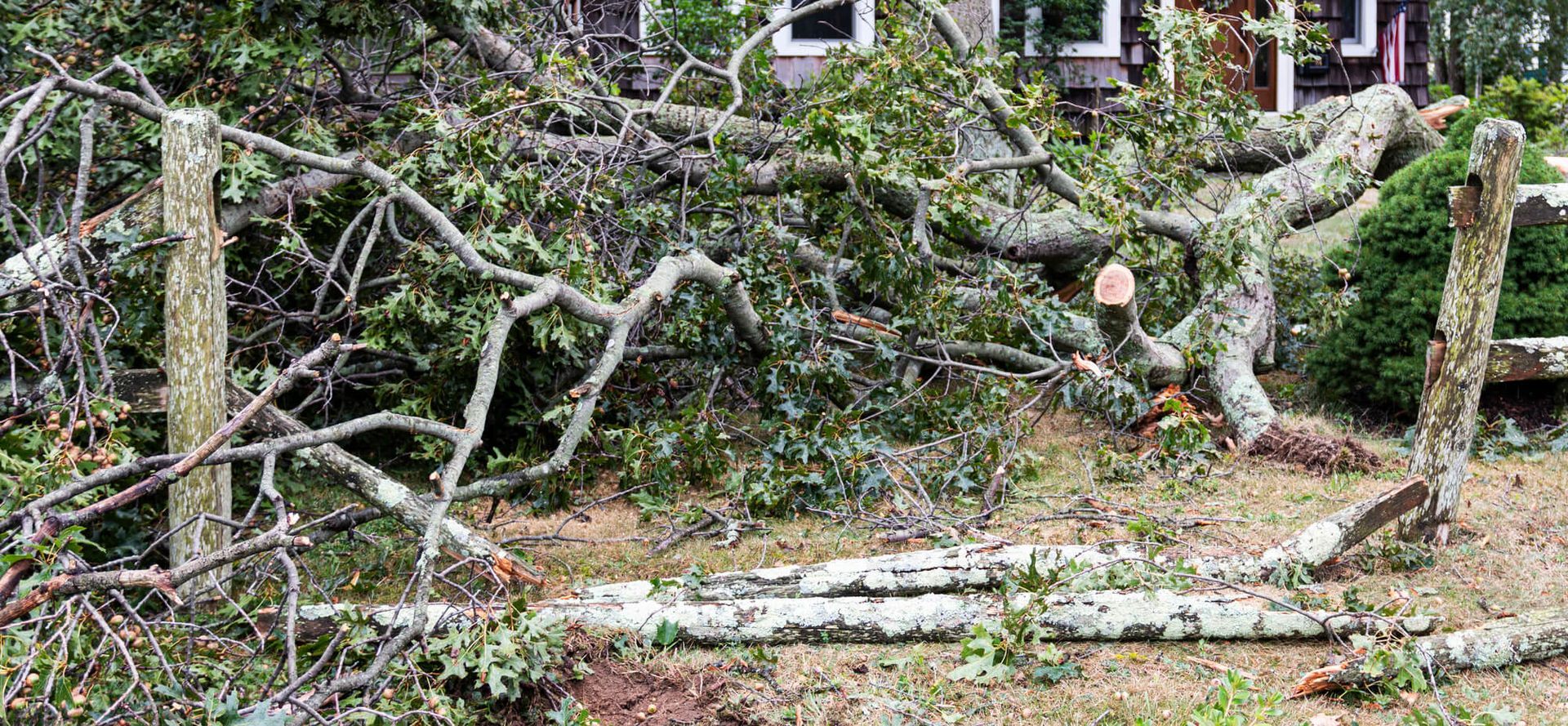
Trees that fail almost always show something first. The reason fall and winter produce so many emergencies is not that the wind creates defects, but that it finds the ones that were already there. A tree dealt with on a dry day in September is a booked job with a clear price. The same tree in a December gale is an emergency, and there is usually something underneath it by then.
Not sure about a tree?
Send us a photograph or ask us to come and look. We will tell you honestly whether it needs to come out, whether pruning solves it, or whether it is fine and simply looks rough. We say "leave it" often enough that we are comfortable putting that in writing.
New View Tree & Landscaping is based in Renton and works across Bellevue, Newcastle, Seattle, and Kent. Licensed and insured, with free estimates.
Licensed and insured, with a 5.0 rating on Google and free estimates on every job.
We also handle emergency tree removal, tree trimming & pruning, storm damage, stump grinding, and tree removal across the same service area.
Frequently Asked Questions
Can you tell from a photo?
Often enough to know whether it needs a proper look. Anything involving the base, the roots, or a suspected cavity needs someone there.
Does a hollow trunk always mean removal?
No. Trees live a long time with hollow centers, since the strength sits in the outer wood. What matters is how much sound wood is left and what stands underneath.
My tree lost a big limb. Is the whole tree unsafe?
Not necessarily. It depends why the limb failed. A single storm break is different from a limb dropped in still weather, which suggests internal decay.
Worried about a tree on your property? Call New View Tree & Landscaping at (425) 525-8038 or request a free estimate, and we will give you a straight answer.